
Three weeks in London was never the plan.
It’s too slow, too introspective, and offensively expensive.
But there I was.
I usually prefer my cities to unfold like a tightly plotted whodunit—surprising, versatile, with a rhythm you can feel immediately. I’ve always leaned toward places that are gritty, observant, and allergic to pretense.
For a long time, I was entirely convinced London was none of those things.
I was wrong.
The shallowness with which I had judged this city in my younger, more vulnerable years was entirely a reflection of my own lack of depth.
London is a collision.
It is centuries old, built on stone, glass, and metal, and it couldn’t care less if you like it. You learn this the first time someone bumps into you on the street. If you’ve spent more than an hour here, you know the exact "sorry" I’m talking about. A stranger hits you with ridiculous force, physically displaces you from your path, throws out a single word, and vanishes without a backward glance. It happens in under ten seconds. I used to think it was the most disingenuous interaction on earth. Why bother speaking at all? But eventually, I realized every layer of that assault is completely genuine. They are walking with enough brutal intent to run you over, they are briefly sorry for the physical impact, and they genuinely do not care if you accept the apology. That is London.
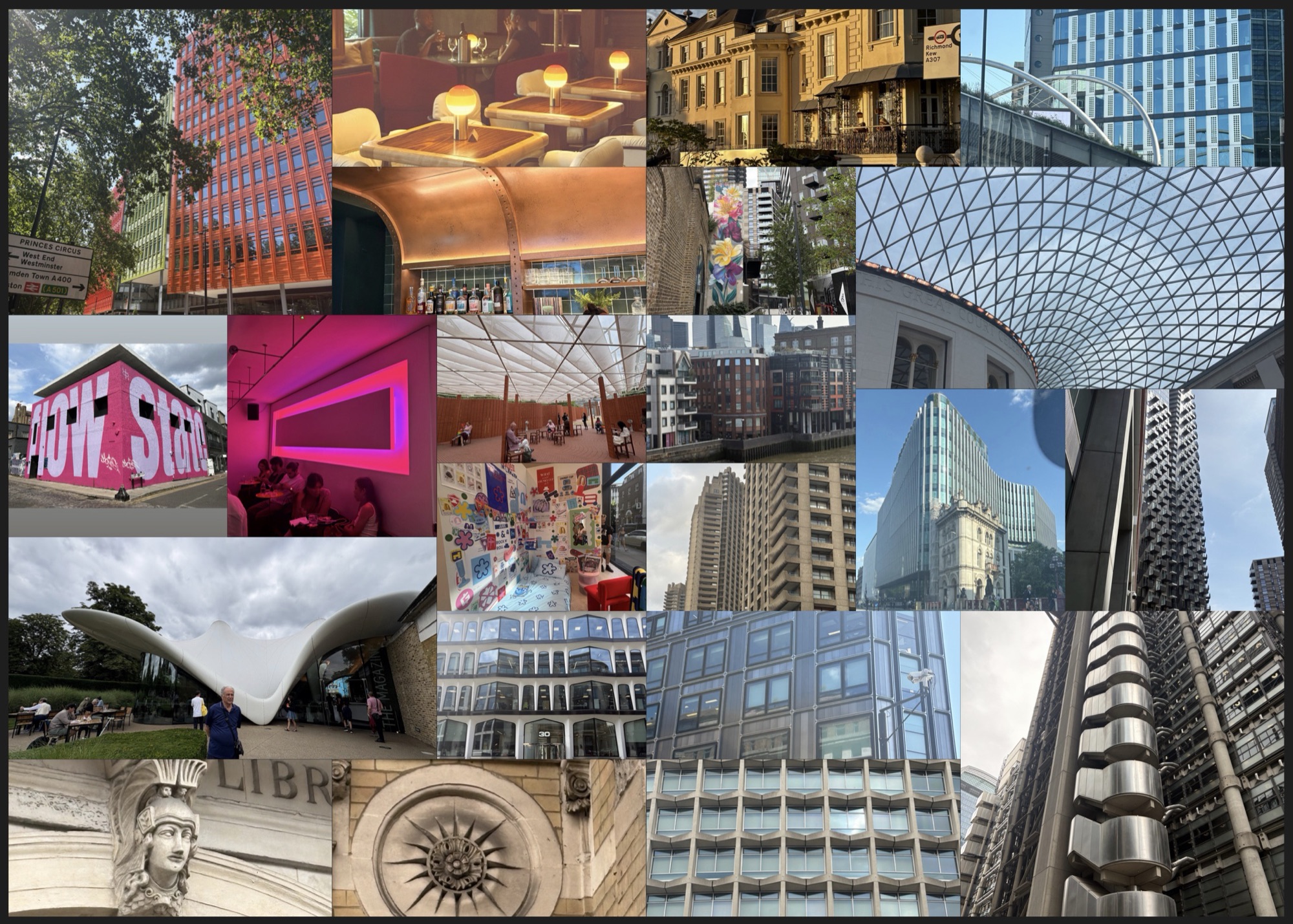
You don't understand a city like that by looking at the skyline. The big picture—the sweeping urban plan, the aerial view—is a lie. The truth is in the joints. The design gods live in the brutal, everyday details: the art deco handrails, the chaotic overhangs, the pediments, the endless sea of windows. By day two, I realized this wasn't a holiday. It was an expedition to strip the city down to its studs.
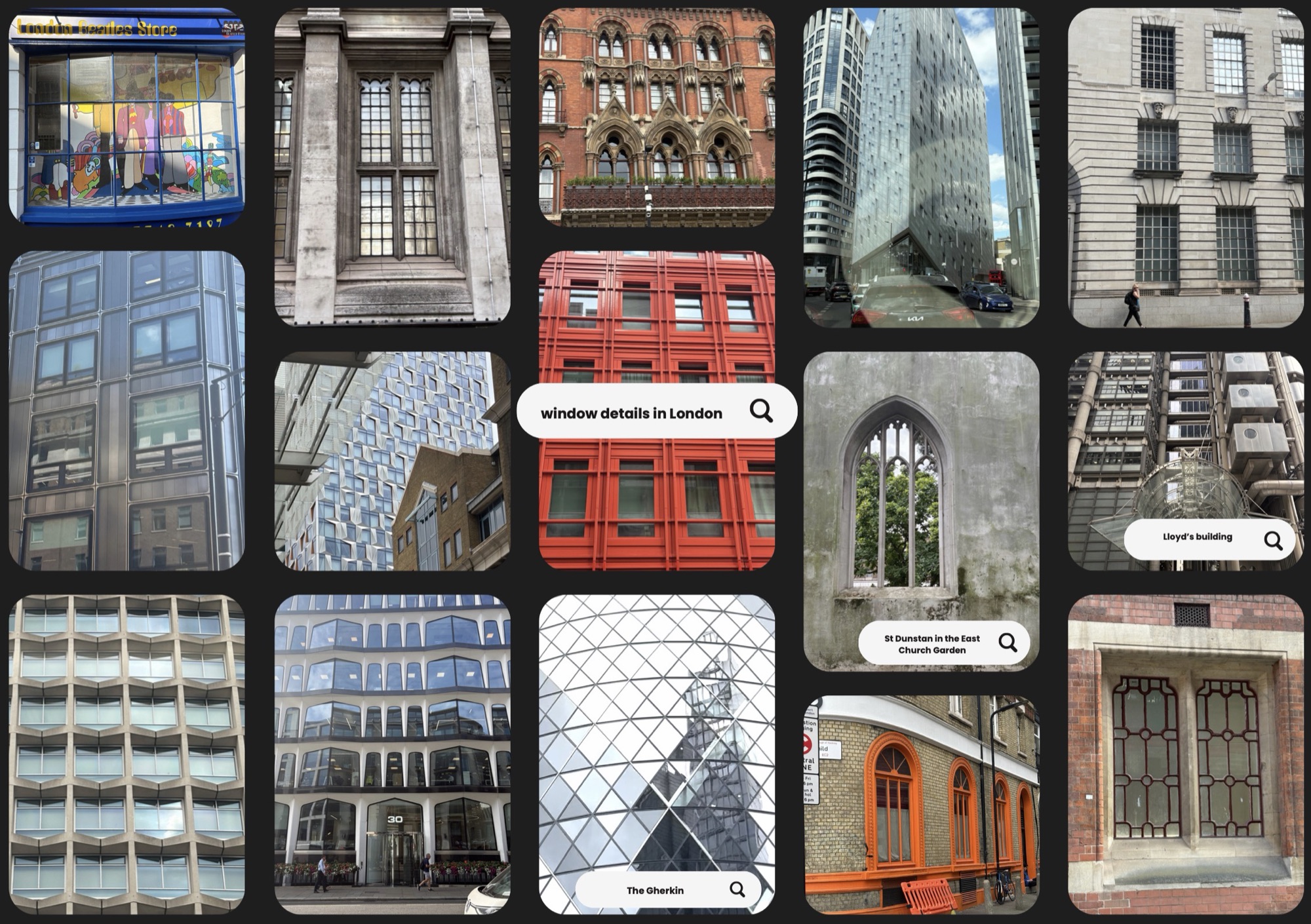
Windows hit me first. They are the voyeuristic eyes of the street. They dictate exactly what you are allowed to see, and more importantly, they dictate what can see you. Inside, London is often cozy, intimate, and occasionally dungeon-esque, allowing the windows to act as mysterious, secretive filters. What smacks you in the face is the sheer, arrogant personality of them. You’ll find the obsessive, suffocating geometry of a modern corporate grid violently crashing into the swagger of a gothic stone arch. London shoves these contradictions side-by-side and dares you to call it ugly. You can’t. You’ve got unapologetic, blood-red framing on a hyper-modern block, and two doors down, the quiet, weary dignity of a classic Georgian sash. It’s a joke on the very concepts of balance and proportion. Somehow, the butchery works.
Two specific moments dragged me down a rabbit hole.
The first was the British Library. There is a temptation, when encountering an iconic building, to look up the architect’s influences and public reception beforehand so you know what you are supposed to feel. The better move is to walk in blind, take the hit, and reconcile your assumptions with the reality later.
Looking at the Library's severe lines and the deliberate lack of windows on the lower floors, I would have bet my life it was Eastern-inspired. It looked like someone had taken a Chinese Neoclassical pagoda and forced it through a brutal exercise in simplification and abstraction. It turns out, I couldn't have been more wrong. The actual influences were nautical and Scandinavian, its colors pulled directly from St. Pancras station next door. I saw Neoclassical Chinese because that’s the rhythm currently occupying my own mind. But there is something beautiful in that misinterpretation. It’s an accidental, silent collaboration between an architect from 1978 and the biases of a designer standing on the pavement forty-eight years later.
The second moment happened on a morning walk. I had set up basecamp in Shoreditch—a caffeinated, loud, energetic nervous system of a neighborhood that sits dangerously close to the South Bank. I have my rituals when it comes to walking in London: cutting through the expanse of Richmond Park, tracing the canal from Camden, or taking the Vaults all the way down to the Millennium Bridge. But this specific morning, the route was simple. Grab a good coffee in Shoreditch, walk to the Gherkin, hit the river at Blackfriars Bridge, and turn around.
I knew exactly what I was walking into with the Gherkin. You see it looming on the skyline the entire approach. I stood under it, gave it its five minutes of respect, and kept moving. It is undeniably beautiful. It is perfect, pleasing, and hyper-ordered.
But then, on the way to the river, the city slapped me in the face.
The Lloyd’s Building. The inside-out monster. If I had ever seen a photograph of this place in design school, I had entirely scrubbed it from my memory. I had completely missed it in the architectural zeitgeist, and so I walked right into it totally blind. Standing beneath its exposed metallic guts, a new rule immediately crystallized in my head: If a piece of architecture wants to call itself “iconic,” it needs to be able to physically smack you across the jaw without requiring a lick of context.
Still mentally bruised from that contained chaos, I pushed on toward the water and stumbled into the ruins of St Dunstan in the East Church Garden. Instant architectural morphine. It is a profound, immediate blankness. Serenity by way of destruction.
Three completely different spaces, experienced back-to-back, without a single moment of whiplash. Instead, they formed a perfect, brutal argument about what a building needs to do to leave a mark.
And this is where the windows tell the story.
The Gherkin uses impossibly clean, slick window forms to wrap a highly complicated, parametric skeleton. It is impact through perfection. Then you hit the Lloyd’s Building, where the windows are violently consumed by the exposed mechanical services—you barely even register the glass behind the heavy machinery. Impact through contained chaos. Finally, St Dunstan: wildly ornate, decorated Gothic window frames holding absolutely nothing, surviving on a ruined, simplified stone shell. Impact through quiet survival.
Three radically different philosophies of geometry and void. Stark contrast in every joint and detail, yet every single one of them hits with the exact same weight.
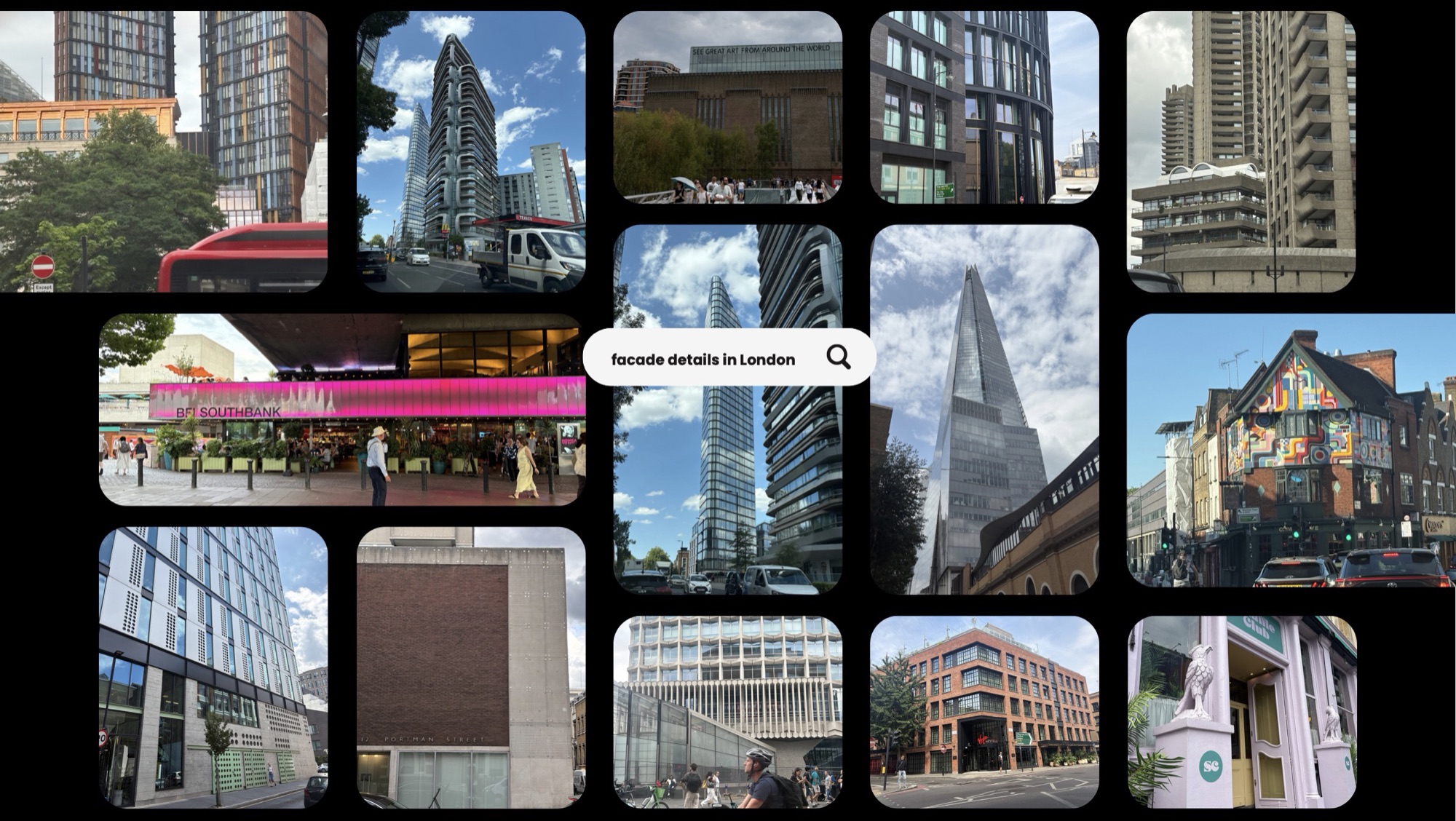
If London wears armor, it isn’t made of cold metal. It’s skin. Bruised, aging, and proud.
The geography is completely schizophrenic. Walk Camden in the morning and you are hit with pure, uninhibited retail chaos. Cross into Chelsea or Kensington by the afternoon, and you've landed on a different planet—chic, colonial bones stitched with sharp, surgical modern additions. Forget the usual tourist rhetoric about shopping; the real rush of being a designer here is dissecting the storefronts. You are consuming a brand's entire identity in one clean, hyper-concentrated bite.
Then, you turn a corner and reality snaps. You’ve got the Shard—an arrogant, slick dagger of glass—shoved right up against the weary, soot-stained Victorian brickwork of Guy’s Hospital. Context clues mean nothing here. "Dated" simply isn't in the vocabulary. I walked past the Barbican forty times and purposely left it alone. Even from the perimeter, it’s a heavy, uncompromising beast, stunning in its absolute, brutal honesty. I wasn't ready to carve into it yet.
If you want a physical manifestation, walk the stretch from the clinical cleanliness of the British Library, past the ornate, screaming exuberance of St. Pancras, ending at the vaulted arches of King’s Cross. It is a textural assault. It’s like dragging your bare hands across velvet, then coarse sand, and finally cold, dead marble. You just have to keep your eyes open.
Stationery is a genetic defect in my family. When you are constantly on the hunt for alternative art supplies or the perfect gouache set for a sister who paints, you inevitably end up in Seven Dials. Two places dug their claws in: Present & Correct, and Choosing Keeping. Present & Correct tells you exactly what it is on the tin—an olive-green facade, ruthless clean lines, pure efficiency. Choosing Keeping hides its magic behind a blink-and-you-miss-it threshold. Retail facades are promises. But hospitality? That's a different game. The best bars I found had facades that gave absolutely zero warning of the decadent, moody chaos waiting inside. Retail seduces you on the street. Hospitality? She drags you into the dark.
The main takeaway from all of this skin? Ruthless intention. Even when two entirely opposing architectural identities face off across a narrow alley, they don't clash. They just hold their ground.
And if we are talking about the skin of the city, we have to talk about The Vaults. It’s a tunnel, a living organism, a world completely untethered from the polite streets above. I’ll dissect it properly when we get to street art, but for now, know this: if the facades of Kensington are London's tailored suits, The Vaults are its full-sleeve tattoos. Pure, buzzing rebellion.
You cannot divorce a room from the blood pumping through it. Spaces aren’t just geometry; they are mood-altering substances. They force a specific state of mind on you, and you have no choice but to surrender.
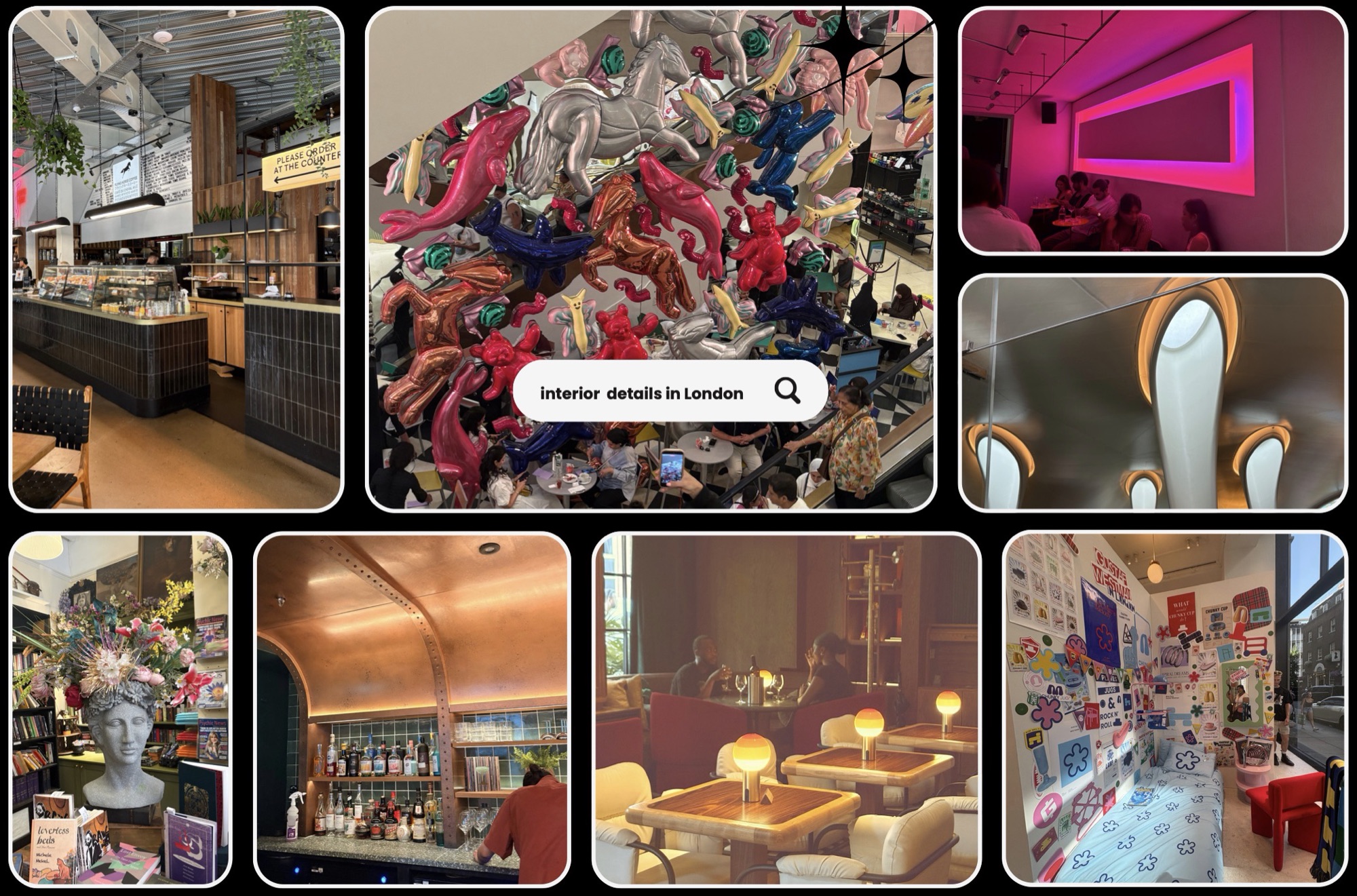
A Saturday evening. Dressed up, inadvertently flying solo, waiting for the night to start. I posted up in a moody, vintage-soaked hotel bar just off the reception. The DJ was spinning heavy, groovy vinyl. Three gradient table lamps bled a nostalgic, artificial sunset across a dark copper bar. Deep greens, dark wood, and Scottish bartenders pouring fiercely acidic, perfectly balanced drinks. To my left, a woman sat calmly doing a Sudoku. It was an easy, low-stakes purgatory, filled with vintage curios and hanging plants—a place to kill time beautifully.
Later that same night, the purgatory shattered. I found myself in an inconspicuous basement dive, screaming with a massive pink neon sign that swallowed the room. Pure, unapologetic indulgence. A beautiful fever dream that tasted like anchovies and absinthe. It was an exercise in brutalist hospitality: cold, hard stainless steel benches and an uneven wooden floor. The designer in me immediately clocked the imperceptible floor-level difference that acted as a silent assassin, claiming a tripping victim every ten minutes. Meanwhile, a group of friends debated their Pride plans over a table that featured a precise, 3mm gap between the top and the frame. I looked closely. It was sparklingly, obsessively clean. A gorgeous, dangerous trap.
Then comes the morning after. The antidote. Every morning, the exact same routine at the exact same coffee shop. No music. Just the chaotic, buzzing energy of Londoners talking, the heavy scent of baked goods, and the sharp bite of a damn good extraction. The space is a masterclass in restraint: black and light wood, doing nothing but acting as a canvas for the green foliage and the morning sun. You sit outside, surrounded by people swathed in various shades of monochromatic black, drinking your coffee, journaling, recovering. Pure, unadulterated satisfaction.
Eventually, you have to re-enter the noise, which leads to Oxford Street. Walking into Selfridges is an absolute, weaponized sensory assault. The air is thick with vetiver, bergamot, pistachio, and money. Your eyes can’t physically track the chaos—silk, diamonds, velvet, every conceivable color fighting for dominance. I drifted into a pop-up by a favorite designer, and it was pure dopamine decor. Pastel ceramics, organic, alien squiggles, and a soft pink-and-red scarf that I bought purely because it had the product elevations printed right on the fabric. The store is a self-contained universe. Warm, aggressive yellow top-lighting. If heaven is female and highly designed, it looks exactly like this beautiful, chaotic acid trip.
The best interiors, though, are the ones you stumble into blindly. I walked into a café to rest my legs and immediately knew I was sitting inside the mind of Zaha Hadid. You can feel her signature in the fluid, liquid squiggles of the elevation. Inside, massive, alien columns stretch down from the canopy, pulling the daylight into the room. The architecture and the interior dissolve into each other completely. The café was packed, the patrons entirely oblivious to the heavy architectural flexing happening right above their heads. But maybe that’s the ultimate victory of design—when it is so seamless, it just becomes the air you breathe.
Right next door, one of the Hyde Park pavilions offered the exact opposite experience. From the outside, it plays dumb. But cross the threshold, and you are plunged into a dimly lit gallery with David Hockney pieces burning off the walls. Massive, double-height mirrors flank the transition spaces, aggressively bouncing the art and your own reflection back at you. The paintings pull you in, the mirrors violently disorient you, and the building spits you back out onto the grass, completely altered.
Then, violently, it was over.
I had arrived a month earlier completely convinced I would be bored out of my skull. Instead, the city swallowed me whole. The second the plane wheels detached from the tarmac, the withdrawal hit. It was a heavy, desperate urge to turn around, to submit to the city, to let it judge me and chew me up. Airports are engineered to be frictionless, soulless vacuums, they only make the hangover worse. I bought a cheap piece of pulp fiction about vacation romances to anesthetize myself on the flight, but it was a little too on the nose to actually work.
The travel gods have a sick sense of humor. A week later, limping back across the Atlantic from my next stop, a delayed connection landed me in London for one final, glorious night. For the first time in my life, I didn't curse the airline. I took the gift.
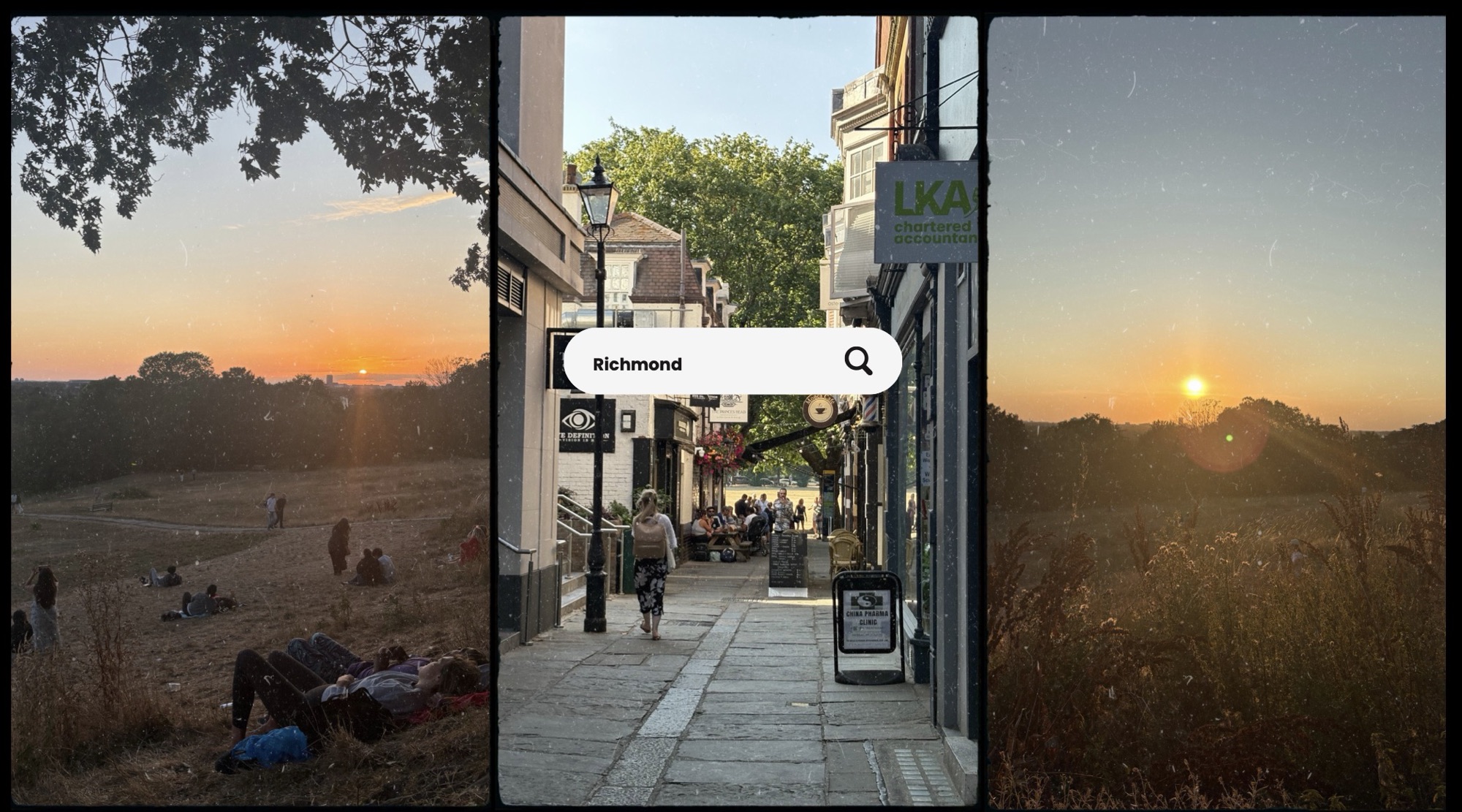
I spent those last few hours bleeding out the daylight on Richmond Hill, watching the sun drop over the green and the river. The air had that sharp, metallic bite that means summer is dead. Sitting there, looking at the skyline, the reality of my job finally caught up with me. I could see the master plan from up there, but I knew the truth now: the master plan is a myth. The city lives and dies in the joints and the details.
So how do I drag this feral, uncompromising energy back to my own studio? When I touch down in Bangalore and stare down the barrel of a residential floor plan or a student center layout, how do I keep from falling back into safe, sterile habits?
You don't just leave London in London. You weaponize it. You question your own first principles. You force yourself to look at the concrete and glass of your own city with new, ruthless eyes, and you refuse to design anything that doesn't have a pulse. I know I’ll fixate on new cities soon enough—Hong Kong and Tokyo are already waiting for their autopsy. But for now, the details of London are sitting right next to me at the drafting board.
And I wouldn't have it any other way.
Join the conversation.
React and leave a comment — sign in with GitHub to add yours.